Skip to content

AI Budgeting Guide: How to Plan, Estimate, and Control AI Costs

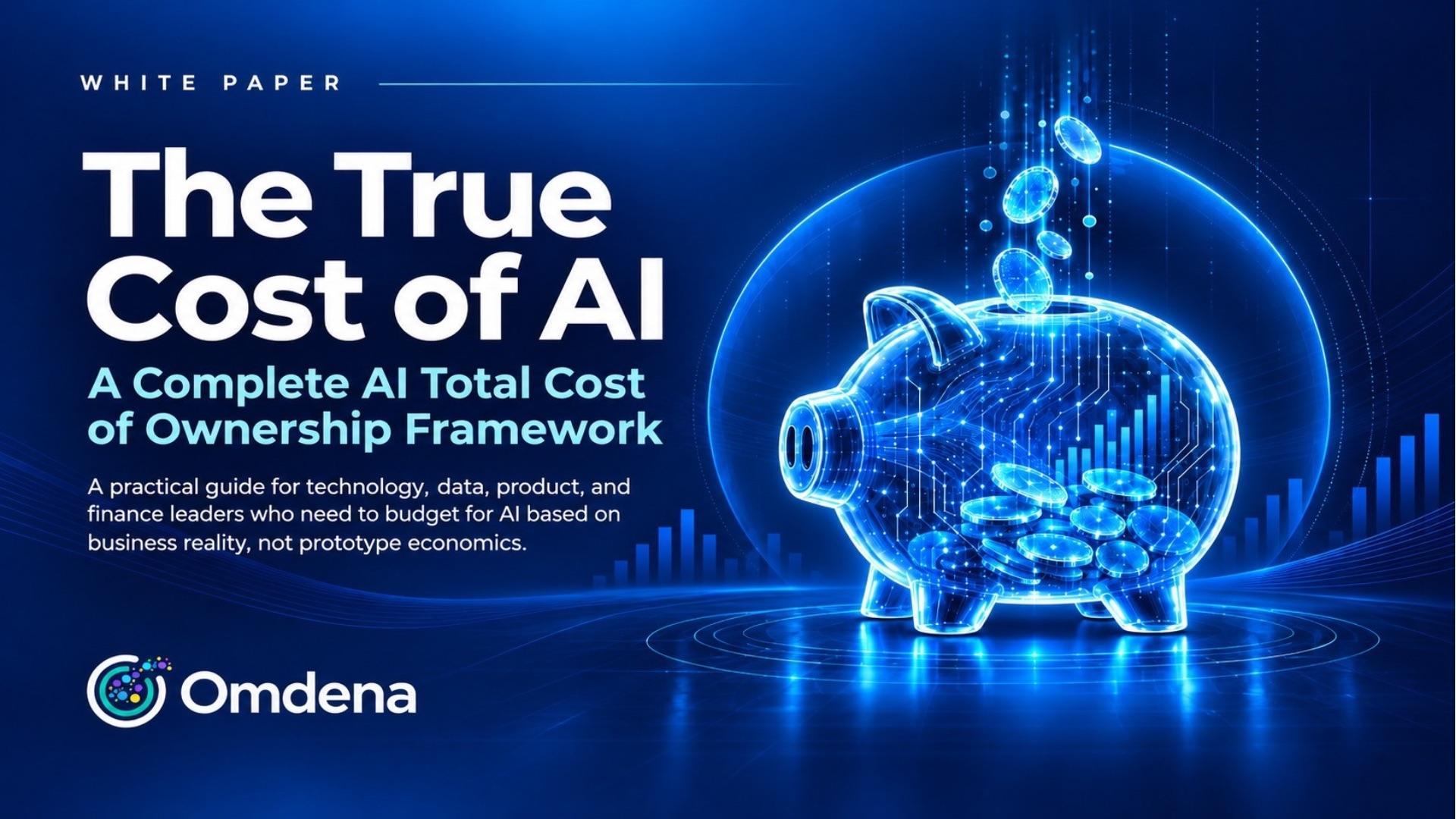
AI development is only part of the investment. Discover the hidden costs of building, deploying, and operating AI systems, and learn how to create realistic budgets, avoid costly overruns, and maximize the value of your AI investments.

  • Understand the complete cost of AI across its lifecycle
  • Identify hidden AI development and operating costs
  • Build realistic budgets with a six-stage AI TCO framework
  • Reduce unnecessary spending, rework, and delivery risks
  • Includes an AI budgeting worksheet and assessment checklist
Download the Free AI Budgeting Guide (opens the form in a new tab)

Learn how to estimate AI costs, identify hidden expenses, build realistic budgets, and manage spending from development to production with our complete AI budgeting framework.

AI Budgeting Guide: How to Plan, Estimate, and Control AI Costs cover

Who this guide is for

AI budgets often underestimate what it takes to move from development to production and maintain a reliable system over time. This white paper is designed for business, technology, product, and finance leaders who need to understand the full cost of AI investments, identify hidden expenses, and build realistic budgets that account for the entire AI lifecycle.

  • CTOs, CIOs, and Chief AI Officers
  • CFOs and Finance Leaders
  • Heads of AI, Data, and Engineering
  • AI Product Managers and Technical Leaders
  • Enterprise Architects and AI Solution Architects
  • AI Program Managers and Digital Transformation Leaders
  • AI Consultants and Technology Advisors
  • Business Leaders Planning AI Investments

Why AI budgets fall short

  • AI budgets focus on development costs while overlooking production and long-term operating expenses
  • Poor data quality and preparation requirements create unexpected costs
  • Legacy systems and complex integrations increase engineering effort
  • Model inference, API usage, and infrastructure costs become difficult to predict at scale
  • Security, governance, evaluation, and compliance requirements are underestimated
  • Human oversight, employee training, and adoption costs are left out of initial estimates
  • Late discovery of technical issues leads to rework, delays, and budget overruns
  • Unclear cost assumptions make it difficult to forecast AI ROI and justify investments

What you’ll learn

  • Understand the complete Total Cost of Ownership (TCO) of an AI system
  • Identify hidden costs across development, data, integration, deployment, and operations
  • Distinguish necessary AI investments from avoidable expenses
  • Estimate recurring costs for model usage, infrastructure, maintenance, and human oversight
  • Build realistic AI budgets using a six-stage lifecycle framework
  • Create cost forecasts based on usage, risk, and operational assumptions
  • Reduce AI delivery and operating costs without compromising quality
  • Use an AI TCO budgeting worksheet and assessment checklist to evaluate investments

Where the AI TCO framework applies

AI costs vary depending on the use case, technical complexity, data requirements, and operational risks. This white paper explains how different AI systems accumulate costs and uses an insurance customer assistant as a running example to demonstrate how hidden expenses emerge from development through production.

AI Customer Support Assistants

Estimate the total cost of building and operating AI assistants, including CRM integration, document processing, model usage, human escalation, and ongoing maintenance.

Healthcare AI Decision Support

Understand how validation, security, governance, and human oversight affect the cost of developing and maintaining AI systems in high-risk environments.

Enterprise AI Agents and Automation

Forecast recurring expenses associated with multi-step AI workflows, model calls, tool usage, infrastructure, monitoring, and operational support.

Predictive AI and Machine Learning

Account for historical data preparation, labeling, model development, evaluation, deployment, and ongoing maintenance when planning predictive AI investments.

The Six-Stage AI Total Cost of Ownership Framework

  1. Build

    Estimate discovery, architecture, development, engineering, testing, and project delivery costs.

  2. Prepare

    Assess data readiness, cleaning, labeling, document processing, system integration, and evaluation datasets.

  3. Secure

    Budget for security, privacy, governance, compliance, risk management, and human oversight design.

  4. Deploy

    Account for production infrastructure, deployment environments, monitoring, employee training, and change management.

  5. Operate

    Forecast recurring model usage, inference, retrieval, human review, technical support, and maintenance expenses.

  6. Improve

    Plan for model updates, prompt optimization, data refreshes, continuous evaluation, and cost optimization.

Tools to plan and control AI costs

  • AI Total Cost of Ownership (TCO) Framework
  • Six-Stage AI Budgeting Framework
  • AI TCO Budget Worksheet
  • AI Budgeting Assumptions Template
  • AI TCO Assessment Checklist
  • AI Cost Optimization Framework
Get the guide

Omdena’s track record

Organizations served
300+
AI solutions delivered
600+
Countries impacted
60+
“Extremely promising project results, not just for Save the Children, but for the entire field of actors.”
John Zoltner, Senior Advisor of Technology for Development and Innovation, Save the Children

Ready to move beyond the pilot?

Book a 30-minute exploration call. We’ll help you see what it takes to build human-centered AI your teams will actually use.