A software project can appear on budget while hidden costs accumulate underneath it. A developer writes code, a ticket is marked complete, and the sprint closes. Weeks later, a bug surfaces, an implementation doesn’t match the business requirement, or two components fail to integrate. Work that was “done” must now be reopened, investigated, and rebuilt.
This is the part of software economics that rarely appears in a project budget. The cost of development is not only the cost of creating something. It is also the cost of correcting what should have been caught earlier, and that second cost grows the longer a problem stays invisible.
This article examines where those costs come from, why early detection changes the math, and how our context engineering platform, Umaku, reduced them across the software development lifecycle.
The Hidden Cost of Software Development
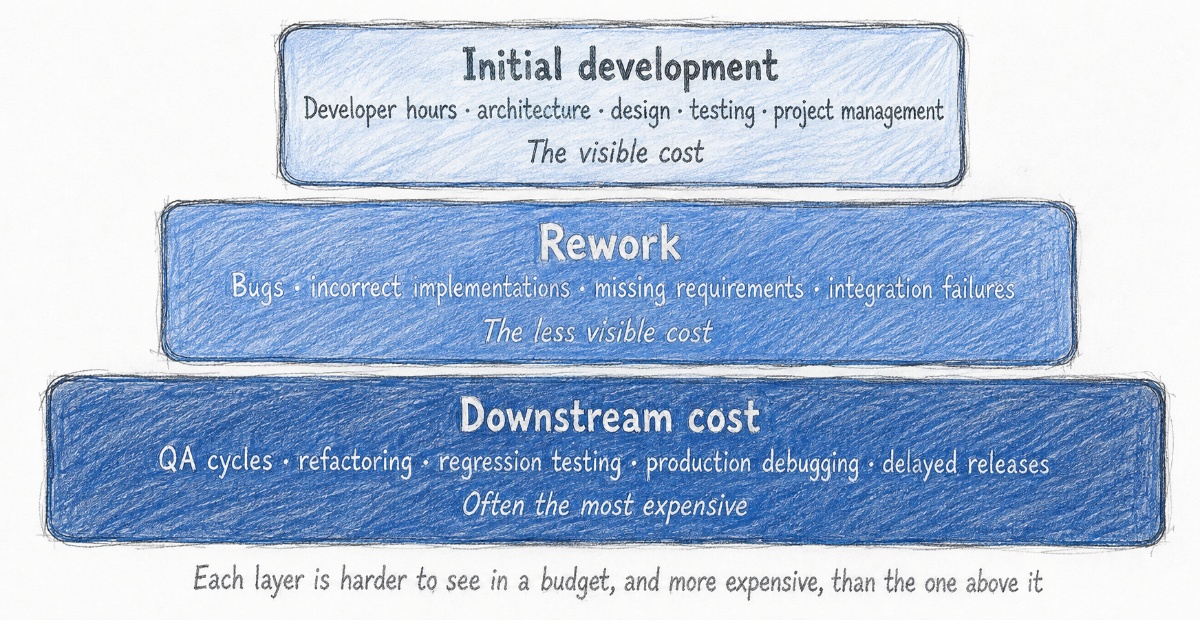
Traditional project budgets tend to underestimate what software actually costs because they price only the most visible layer of work. A more complete model breaks the total into three layers, each less visible and more expensive than the last, as Figure 1 shows.
The first layer is initial development. This is the obvious cost: developer hours, architecture, design, testing, and project management. It is what most estimates and invoices describe, and it is usually the layer teams plan for most carefully.
The second layer is rework. Bugs, incorrect implementations, missing requirements, scope changes, and integration failures all force teams to revisit work that was already paid for once. Rework rarely appears as a line item, yet it quietly consumes engineering capacity that was budgeted for new development.
The third layer is downstream cost, which is often the most expensive. It includes repeated QA cycles, refactoring, regression testing, production debugging, customer support, and delayed releases. By the time a problem reaches this layer, fixing it involves coordination across several people rather than a single developer’s attention.
Figure 1. The Three Layers of Software Development Cost
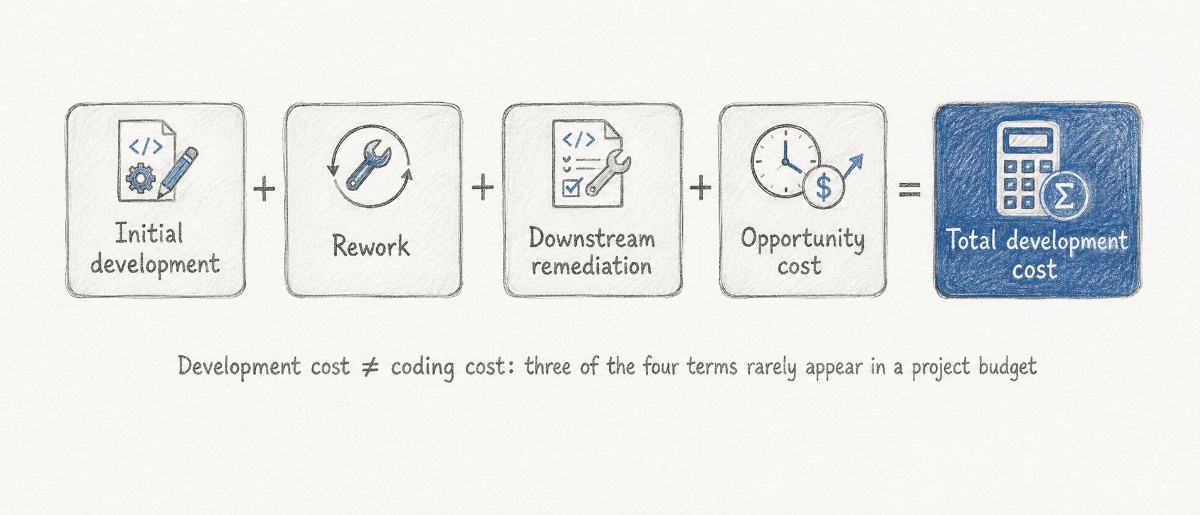
A useful way to summarize this is a simple equation: total development cost equals initial development plus rework plus downstream remediation plus opportunity cost. Development cost is not the same as coding cost, and the gap between the two is where budgets quietly fail. Figure 2 expresses the same idea visually, and this equation frames the rest of this article.
Figure 2. The Total Cost of Software Development Equation
Why Finding Software Problems Earlier Saves Money
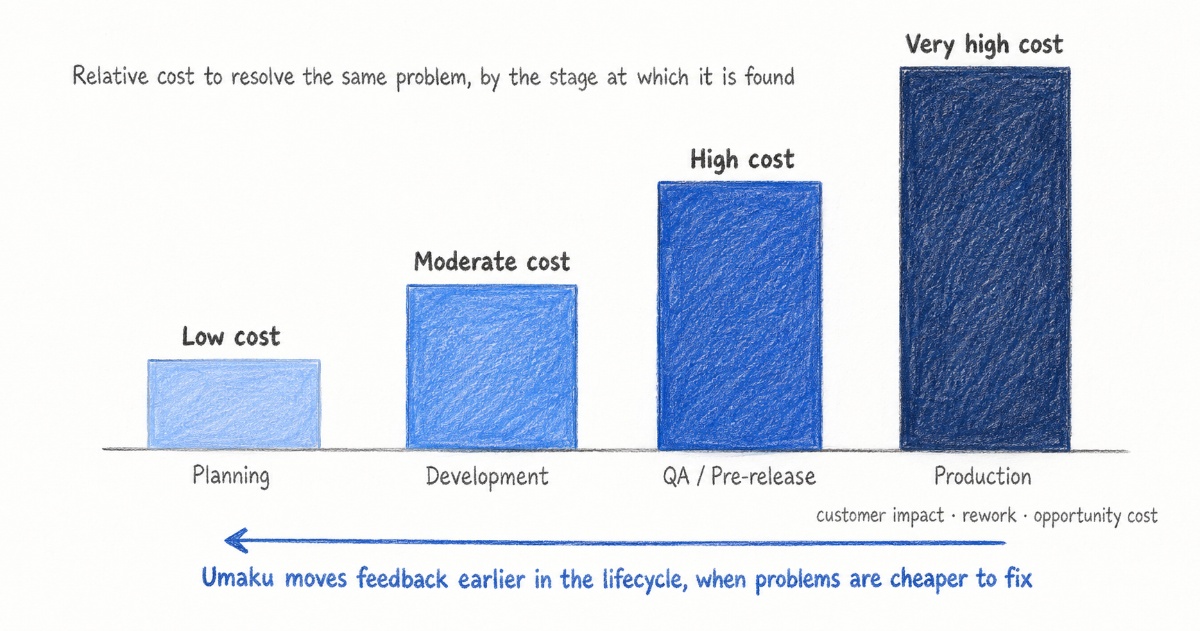
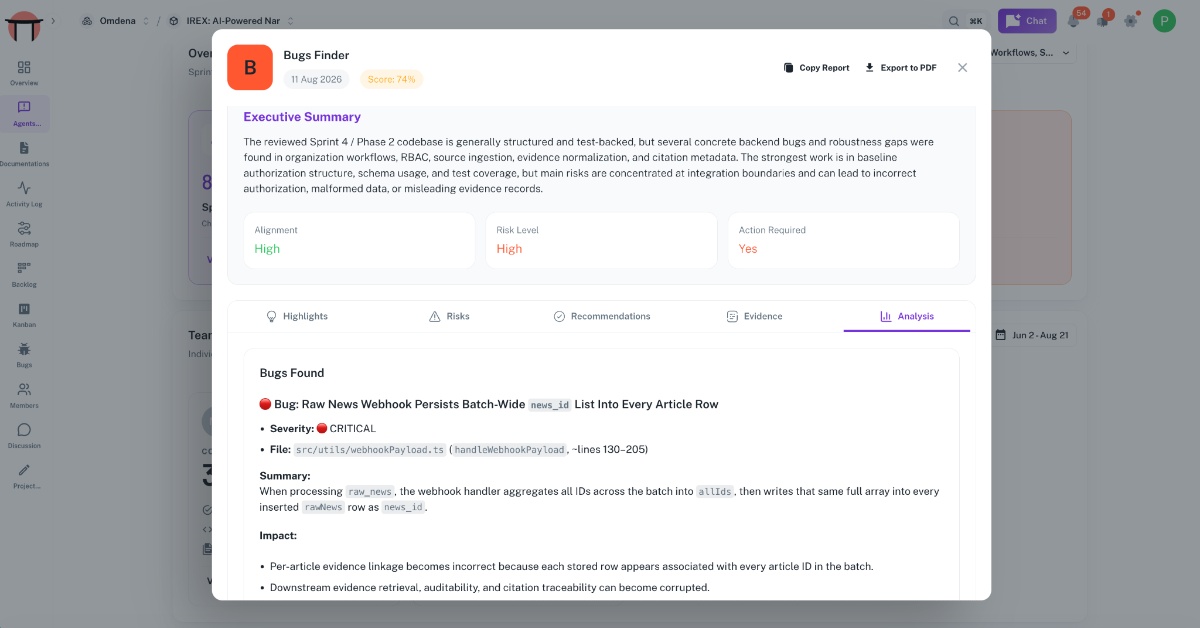
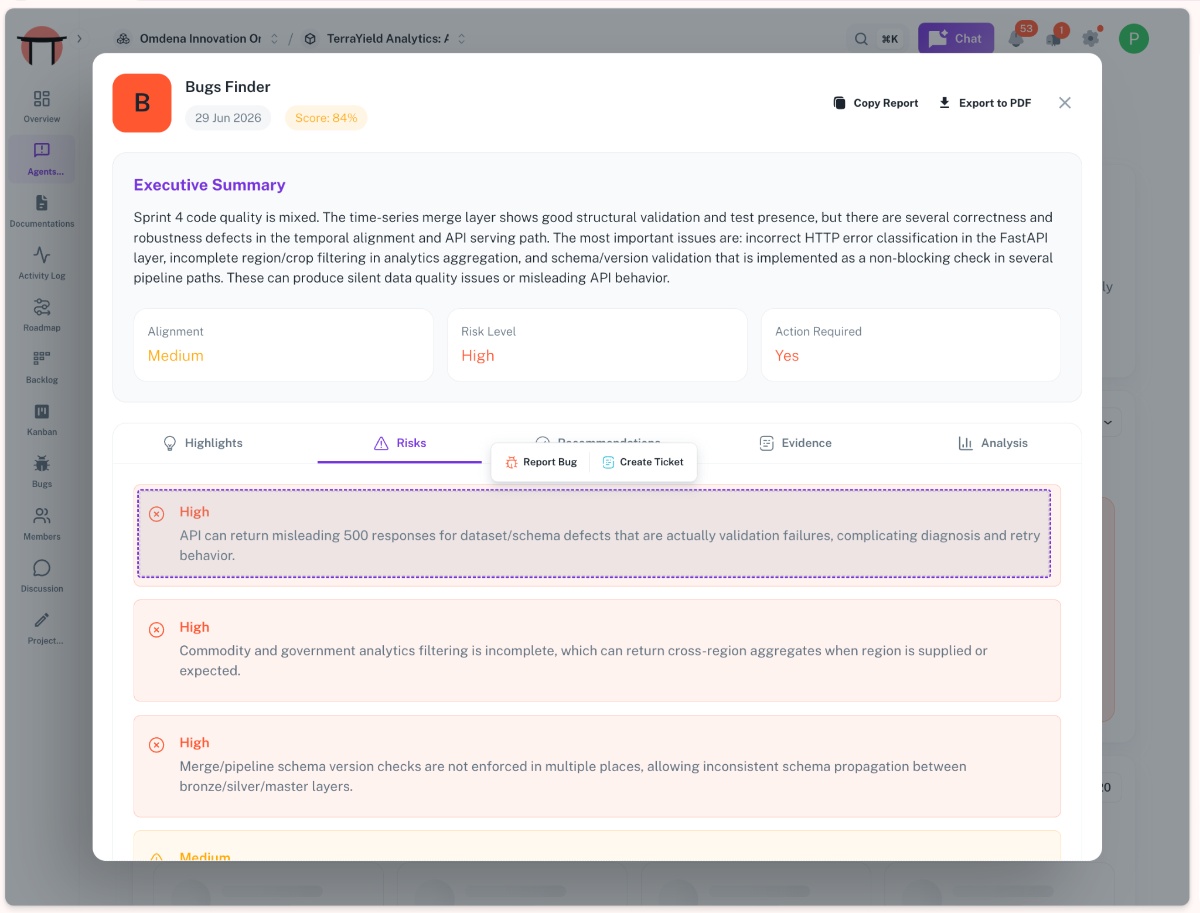
The economics of early defect detection rest on one observation: the same problem gets more expensive at every stage it survives. A bug found while a developer is still working in the relevant code may take a couple of hours to fix. The same bug found near release requires investigation, coordination, regression testing, and sometimes deployment or rollback work.
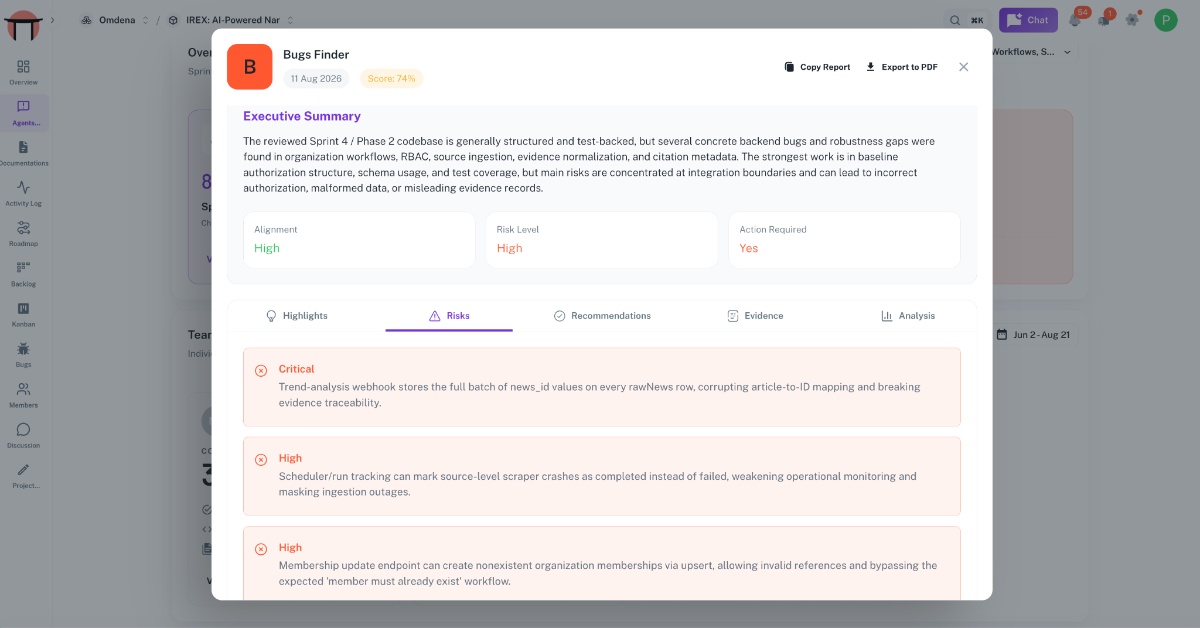
Figure 3. The Umaku Bug report feature keeps an updated list of bugs found as the project progresses
Figure 4 illustrates this progression. A problem detected during planning is cheap. Detected during development, it is manageable. Detected during QA or pre-release, it is expensive. Detected in production, it adds customer impact and reputational risk on top of the engineering effort.
Figure 4. The Cost of Waiting to Find a Software Problem
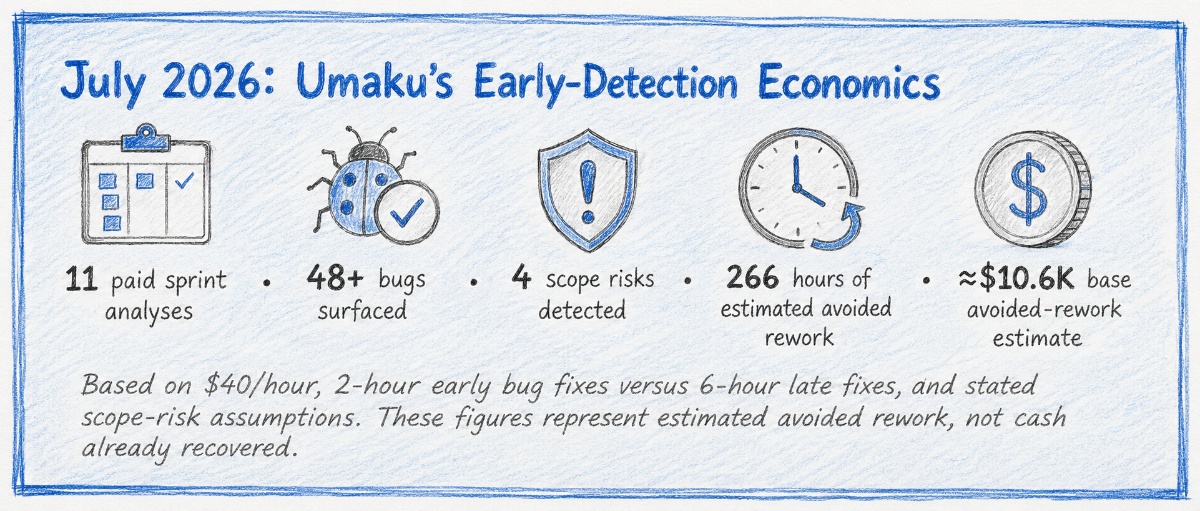
Our context engineering AI system, Umaku, makes this concrete with its July results. Across 11 paid sprint analyses, the platform surfaced approximately 48 bugs and 4 scope risks while sprints were still active.
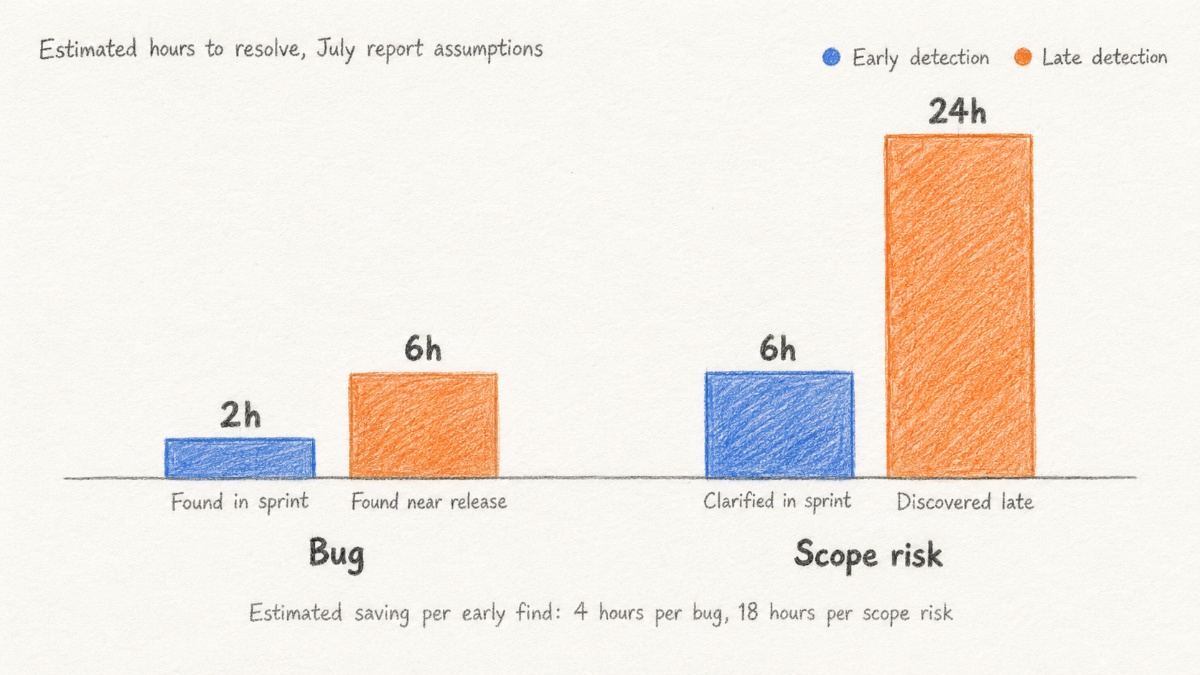
Using a $40 per hour engineering rate, the July leadership report assumed a bug fixed during the sprint takes about 2 hours, while the same bug found near release takes about 6 hours, saving roughly 4 hours per early detection.
For scope, a risk clarified in-sprint was estimated at 6 hours against 24 hours for a late discovery, saving about 18 hours each. Figure 5 compares those fix-time assumptions side by side.
Figure 5. Estimated Fix Effort, Early Versus Late Detection
Those assumptions produce a base estimate of 266 hours, or about $10.6K, of avoided rework in a single month. One distinction matters here: this figure is an estimate of avoided rework under stated assumptions, not cash already recovered.
It describes cost that early detection likely prevented, which is exactly the layer that traditional budgets fail to see. Figure 6 summarizes the month at a glance.
Figure 6. Umaku’s July Portfolio at a Glance
Direct Cost Savings: Where Umaku Can Reduce Development Spend
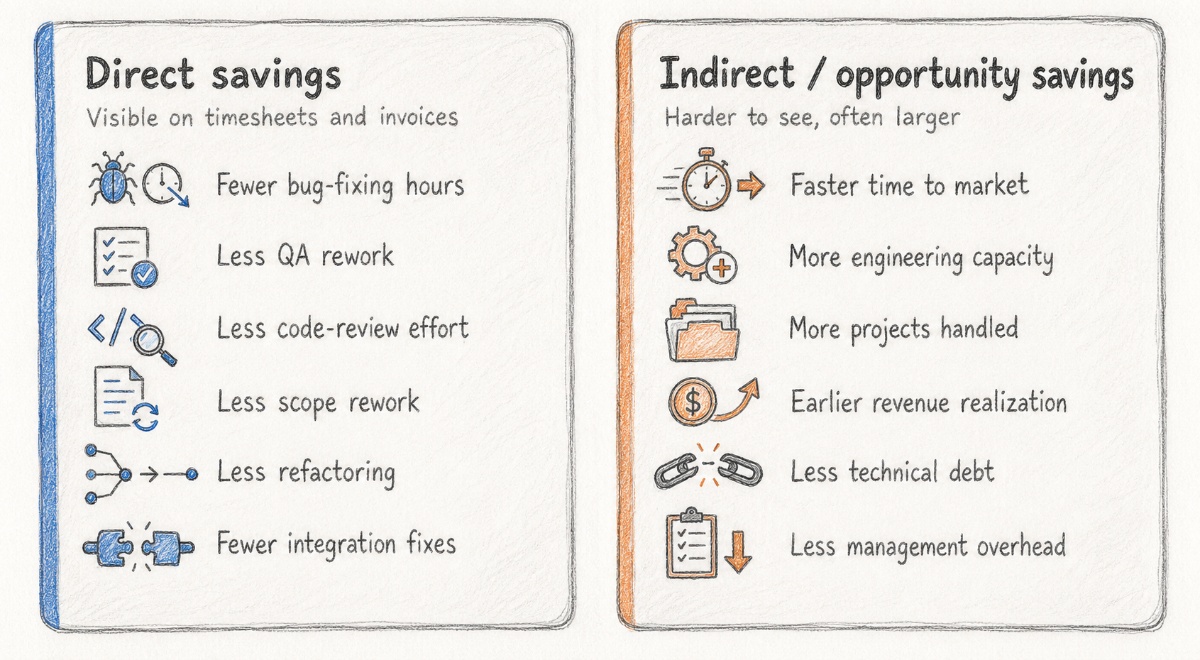
Direct savings are the costs a team can point to on a timesheet: hours that would have been spent on rework and review had a problem been found later. Umaku targets six of them.
Reduced Bug-Fixing Rework
Figure 7. Early bug fixes save time and cost associated with late detection and action.
Umaku’s Bug Finder analyzes code for logical and semantic bugs while development is still underway. Fixing a bug before subsequent code is built on top of it is cheaper for a structural reason: nothing else depends on the defective behavior yet, so the fix stays local instead of rippling through dependent components and tests.
Reduced Scope-Related Rework
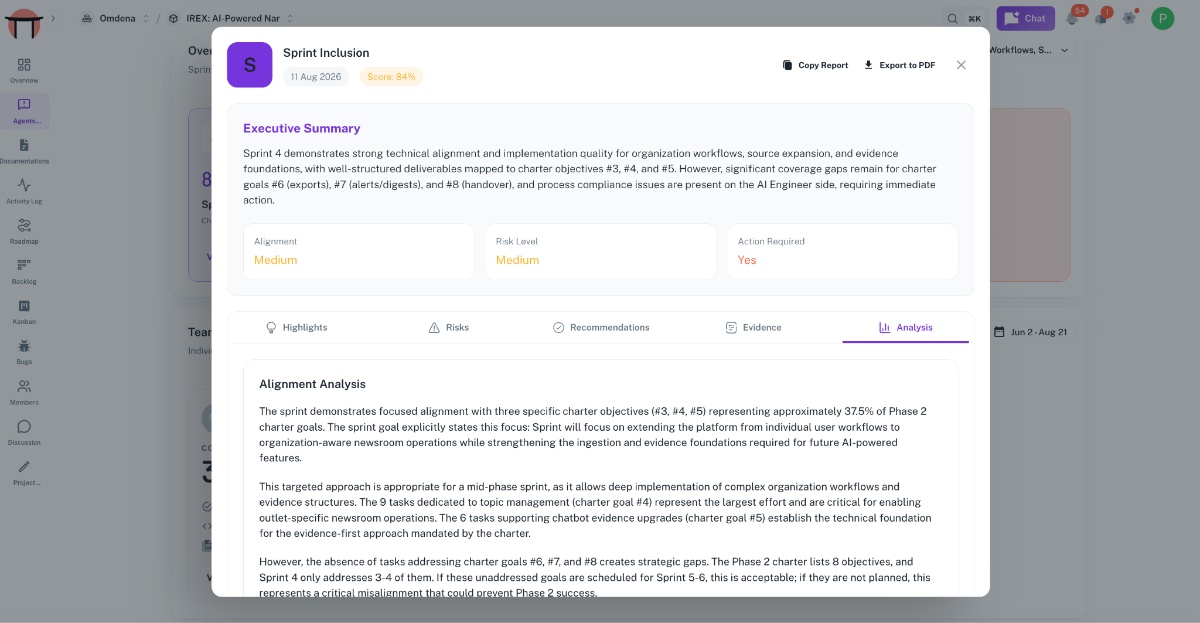
Figure 8. Sprint inclusion enforces alignment
Umaku’s Sprint Inclusion analysis evaluates whether sprint work aligns with sprint objectives, whether those objectives align with the project charter, and whether the code matches the intended scope. This surfaces missing or misaligned implementation before it hardens into expensive rework. In July, this analysis identified four scope risks across the portfolio.
Traditional review asks senior engineers to inspect large amounts of code by hand. Umaku provides a context-aware AI review layer that surfaces risks, recommendations, evidence, code-quality issues, scope misalignment, and potential bugs. Human review is not eliminated. Instead, senior engineers spend their limited attention on the findings that actually require judgment.
Reduced QA Churn
Issues caught during development are less likely to reappear as repeated QA cycles near release. Every defect resolved in-sprint is one fewer bug report, retest, and re-release loop later, which shortens the pre-release phase where schedules most often slip.
Reduced Integration-Related Rework
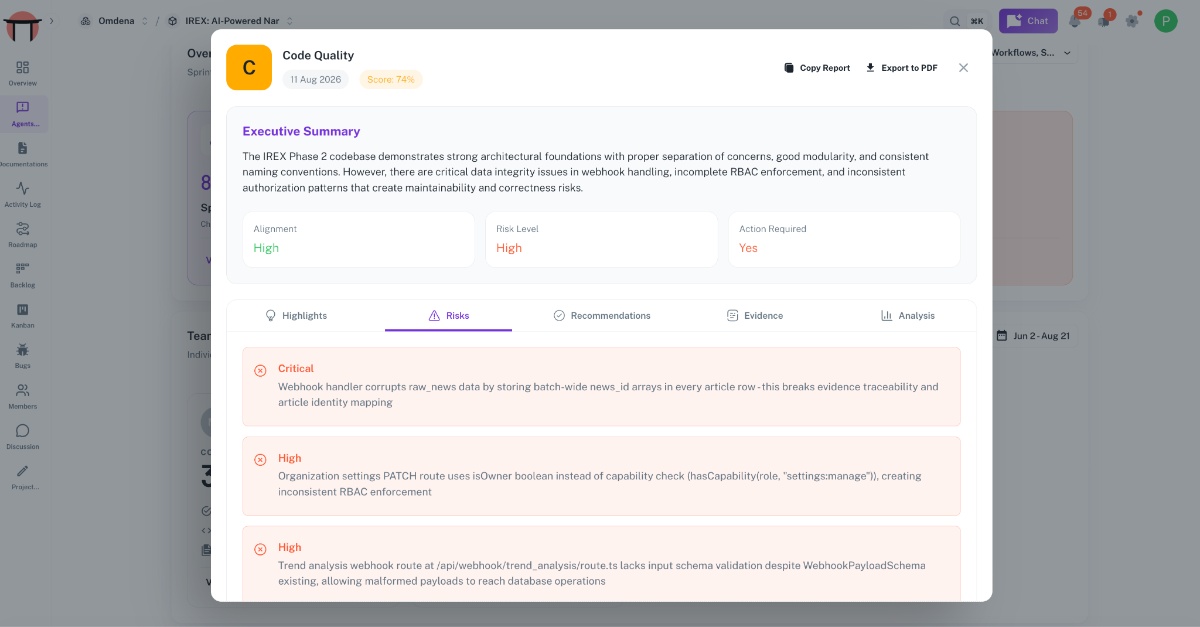
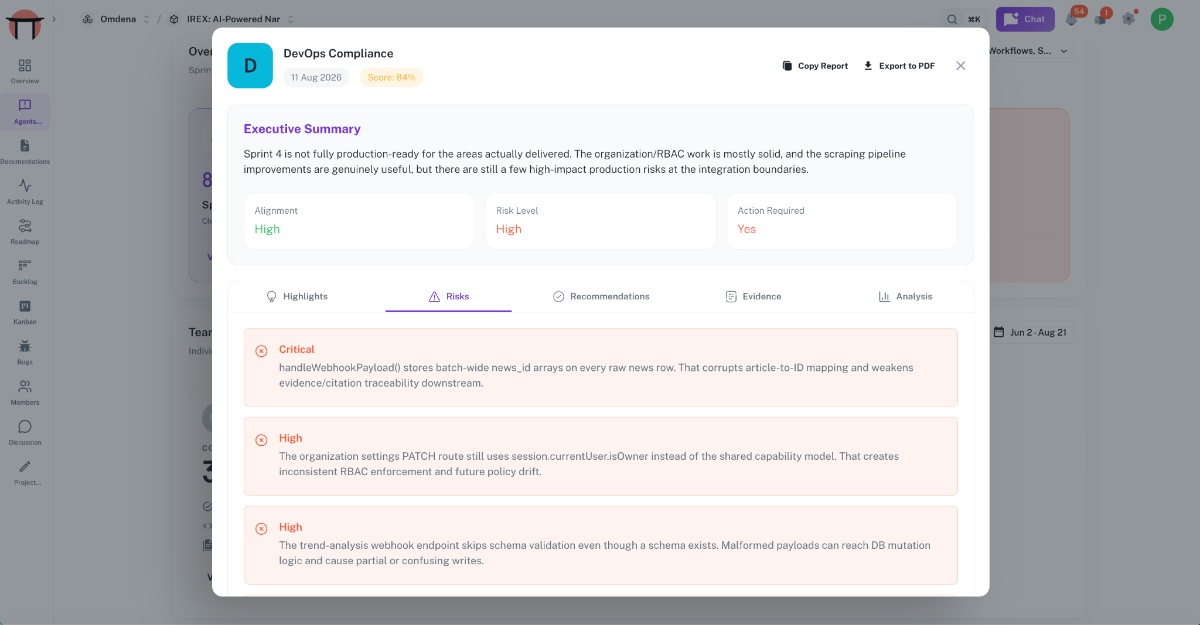
Figure 10. Devops Compliance feature
Umaku’s DevOps Compliance analysis examines integration between system components. Custom applications frequently involve several engineers building different parts of a system at once, and integration problems can stay invisible until those parts interact. Checking integration continuously keeps such problems from surfacing late, when they are hardest to unwind.
Reduced Technical Debt
Small problems compound. Early identification of bugs, scope gaps, and code-quality issues prevents minor flaws from accumulating into the kind of debt that eventually demands a dedicated refactoring effort, which is among the most expensive and least predictable items in any engineering budget.
Indirect Cost Savings: The Opportunity Cost of Rework-Heavy Development
Direct savings are easy to measure, but opportunity costs may be greater. Time spent on avoidable rework cannot be used for new features, client projects, product improvements, or innovation.
Delays also have wider costs. A postponed launch can slow customer onboarding, revenue, market entry, and internal efficiency gains—often costing more than the engineering work itself.
Reducing rework increases capacity. For organizations like Omdena, the same engineering teams can support more projects without increasing headcount.
Early visibility also reduces coordination overhead. Technical leads and project managers spend less time investigating problems and revising plans, leaving more attention for decisions that advance projects.
Figure 11 shows how these direct and indirect costs relate.
Figure 11. Direct Versus Indirect Cost Savings
How Umaku Creates These Savings
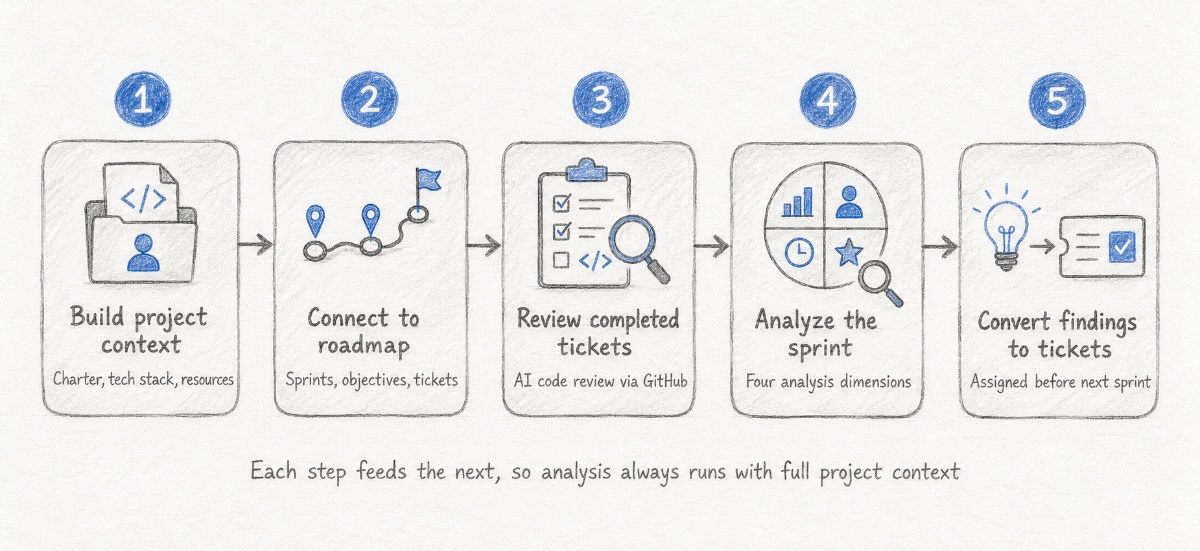
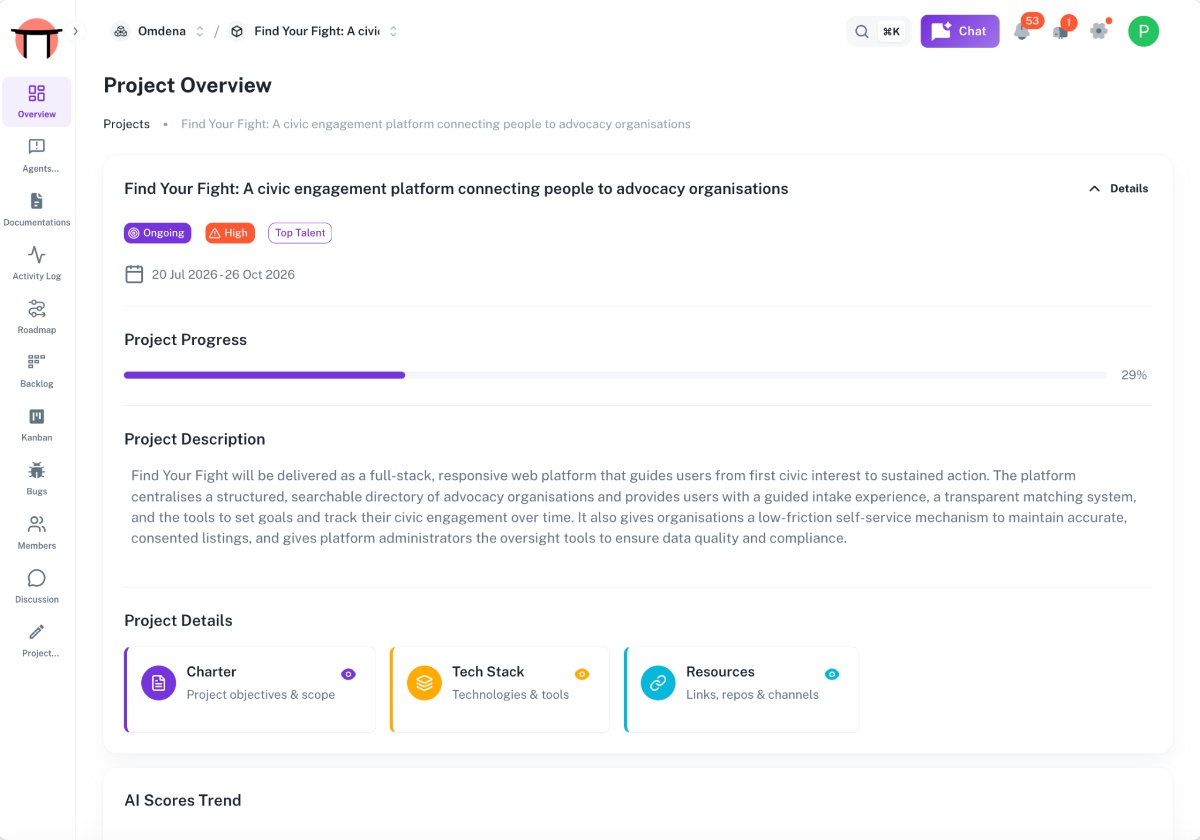
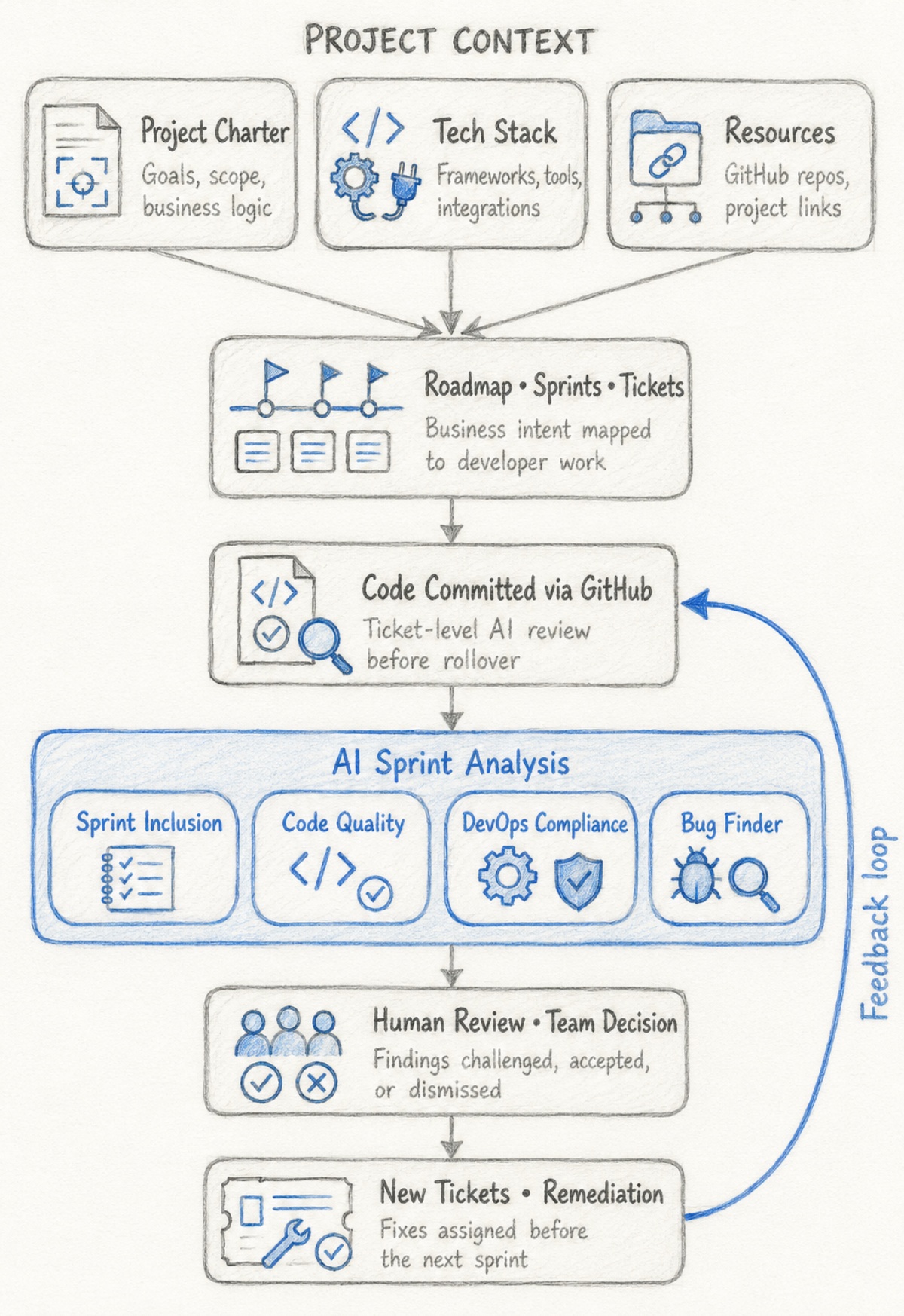
Umaku produces these savings through a workflow that connects business intent to code, rather than through any single feature. It operates in five steps, summarised in Figure 12.
Figure 12. Umaku’s Five-Step Delivery Workflow
Step 1: Establish the Project Context
The first step is building project context. Umaku establishes three context layers.
Project Charter: holding goals, scope, business logic, and end-user requirements.
Tech Stack: describing frontend and backend technologies, frameworks, tools, and integration requirements
Resources: linking GitHub repositories and other key project materials.
This matters because generic AI code-review tools can analyze code but lack the project-specific business and scope context needed to judge whether the code is right.
Figure 13. The project overview provides context with the Charter, Techstack and Resources
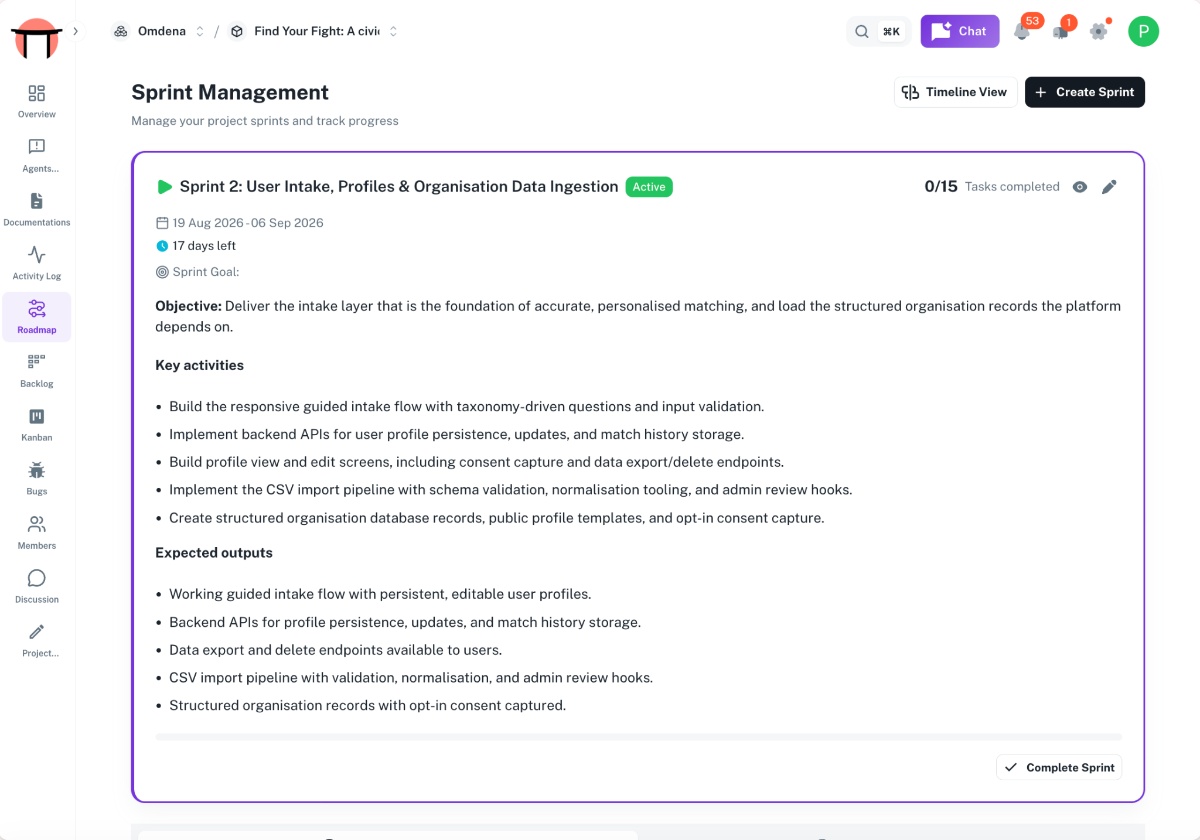
Step 2: Connect Project Context to the Development Roadmap
The second step connects that context to the development roadmap. Projects are organized through roadmaps, sprints, sprint goals, objectives, tickets, and developer assignments.
This creates a traceable relationship between what the business wants, what the sprint is supposed to accomplish, and what developers actually build.
Figure 14. Umaku Sprint Management: From Sprint Goals to Developer Assignments
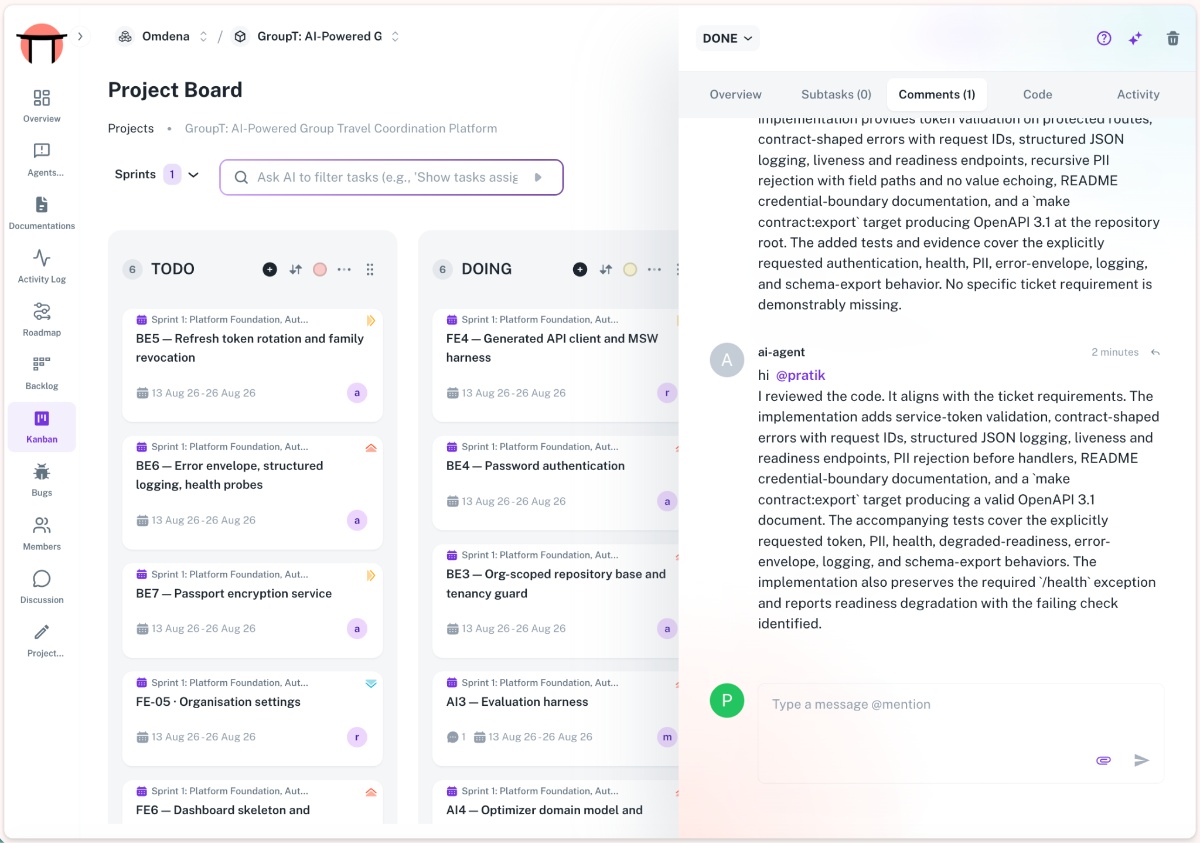
Step 3: Submit Completed Work for AI Review
The third step is reviewing completed work. When a developer finishes a ticket, the code is connected through GitHub and submitted for AI review, creating a feedback loop before the sprint moves forward rather than after it closes.
Figure 15. AI Code Review: Submitting Completed code for AI Analysis
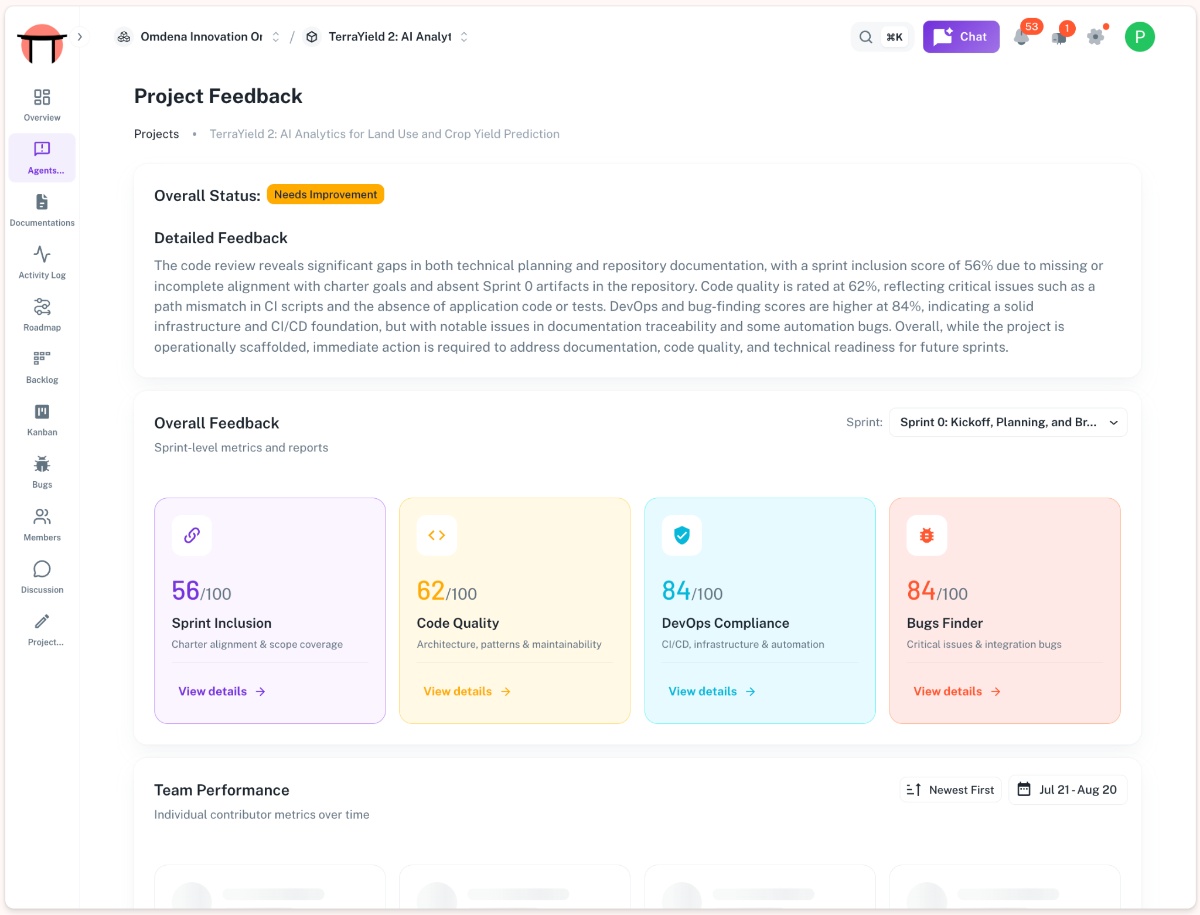
Step 4: Analyze the Completed Sprint for Quality and Risk
The fourth step analyzes the completed sprint. Deep research agents examine the sprint across four dimensions: Sprint Inclusion, Code Quality, DevOps Compliance, and Bug Finder. Sprint Inclusion and Bug Finder carry particular weight because scope misalignment and logical bugs are the two problem types that grow most expensive when discovered late.
Figure 16. Completed Sprint Analysis Across Scope, Code Quality, DevOps, and Bugs
Step 5: Convert AI Findings into Actionable Developer Tickets
The fifth step converts findings into action. Umaku does not stop at producing a report; findings become tickets assigned to developers, shortening the distance from detection to decision to remediation. Figure 17. Converting AI Findings into Actionable Developer Tickets
Figure 17. Converting AI Findings into Actionable Developer Tickets
Figure 18 shows the full chain of the Umaku workflow..
Figure 18. Umaku’s Context Layer, From Business Intent to Remediation
A Simple Framework for Calculating Umaku’s Potential Cost Savings
Engineering leaders can estimate potential savings with a simple formula: the number of issues caught early, multiplied by the estimated hours saved per issue, multiplied by the engineering hourly cost.
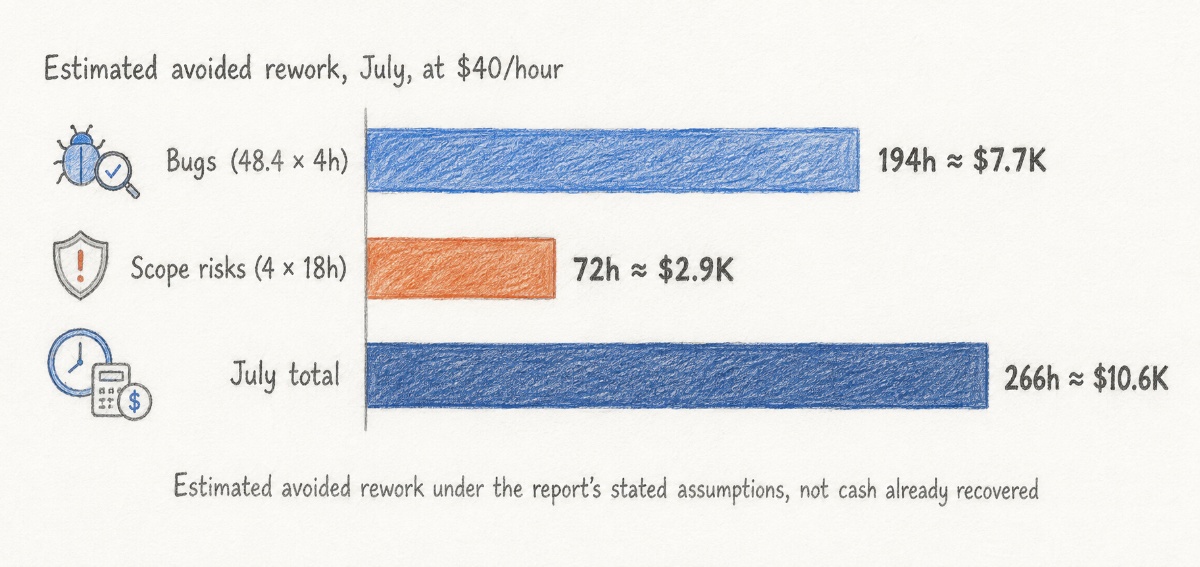
Applied to Umaku’s July data, the bug side of the calculation is 48.4 bugs × 4 hours saved × $40 per hour, or roughly $7.7K in estimated avoided rework. The scope side is 4 scope risks × 18 hours × $40 per hour, or about $2.9K. Together they produce the report’s base estimate of approximately $10.6K, broken down in Figure 19.
Figure 19. July Avoided-Rework Estimate by Category
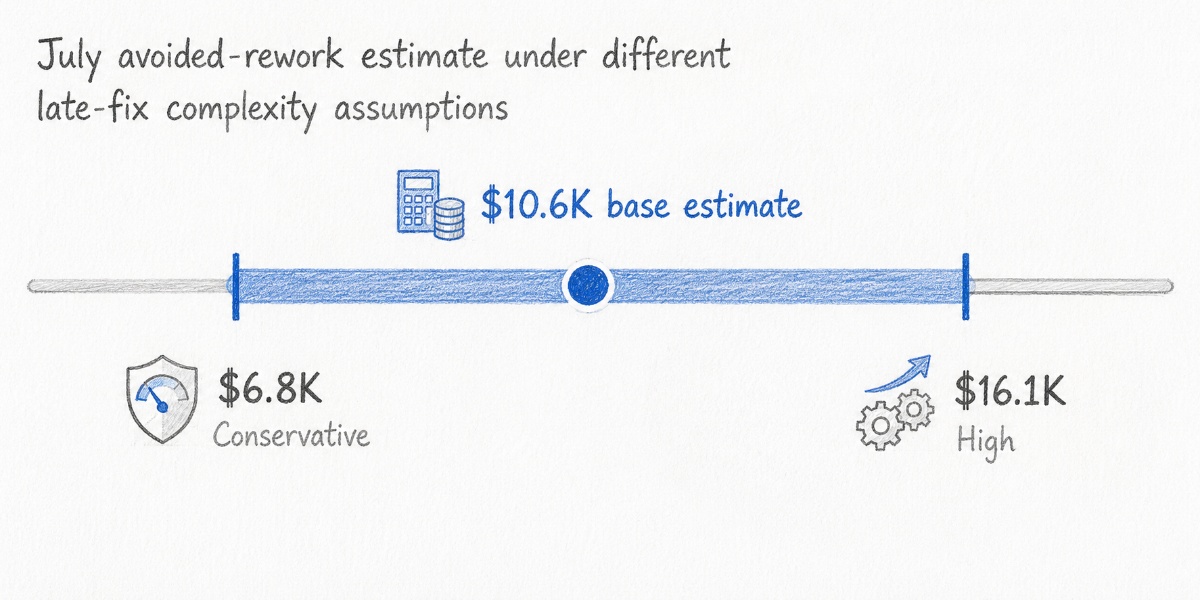
These are estimates of avoided rework based on stated assumptions. They should not be read as guaranteed savings or as cash already recovered, and the July report itself makes that distinction explicit, offering a sensitivity range of $6.8K to $16.1K depending on late-fix complexity, shown in Figure 20.
Figure 20. Sensitivity Range for the July Avoided-Rework Estimate
The broader calculation adds the harder-to-see terms: total economic impact equals direct avoided rework plus recovered engineering capacity plus reduced delay plus reduced downstream remediation plus opportunity value. Leaders can apply this framework to their own portfolios using their own rates and defect histories.
Why Context Matters for Cost Savings
The savings described above depend on a capability that generic AI coding tools lack. A generic agent can flag that a function could throw an error. A context-aware platform can ask a more valuable question: does this implementation satisfy the business requirement defined in the project charter and the objective of this sprint?
The difference is context. Umaku combines business context, technical context, code context, sprint context, ticket context, and historical project context in a shared semantic layer that exposes documentation, tickets, code, roadmap information, and known bugs to its analysis agents.
A tool that sees only the code can judge whether the code is well written. A platform that sees the whole project can judge whether the code is the right code, and wrong-but-well-written code is precisely the kind of problem that becomes expensive late.
The Human-in-the-Loop Model: AI Finds Problems, Humans Make Decisions
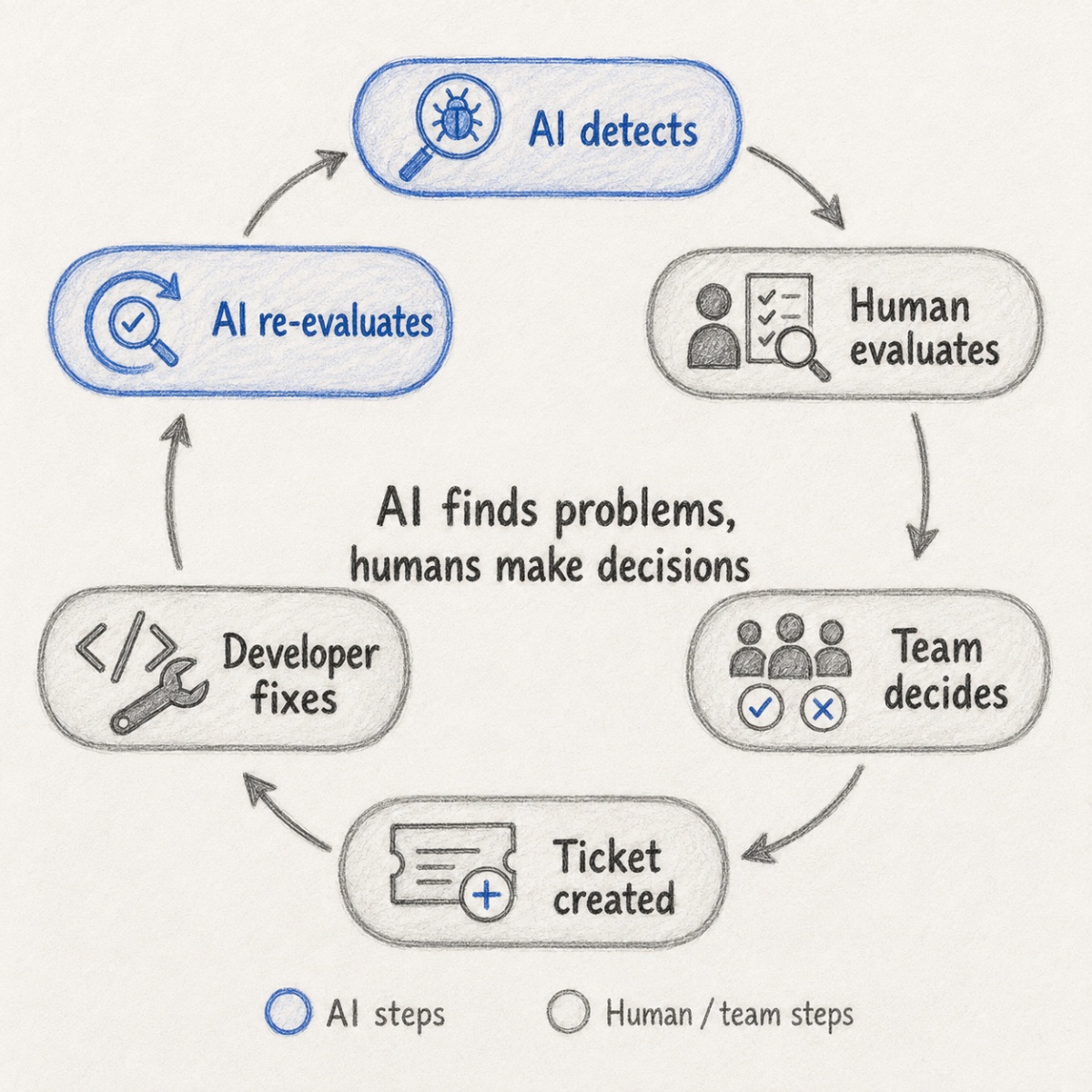
Umaku does not replace developers, senior engineers, or QA teams. Its operating model is a loop: AI detects, a human evaluates, the team decides, a ticket is created, a developer fixes, and AI re-evaluates. Figure 21 illustrates the cycle.
Figure 21. The Human-in-the-Loop Operating Model
Findings are challengeable. A project manager can raise an AI finding with the developer, and if the team determines the feedback was incorrect, that discussion becomes project knowledge that can inform future agent behavior.
This matters for the cost argument because the savings come from redirecting human attention, not removing it. Engineers stay, senior reviewers stay, and the low-value portion of review work shrinks so that human judgment concentrates where it is actually needed.
From Software Development Cost to Software Delivery Economics
Traditional cost analysis asks what it costs to build a system. A better question is what it costs to successfully build, validate, launch, and maintain it. That larger figure includes build cost, rework cost, quality cost, delay cost, technical debt, and opportunity cost.
Viewed this way, Umaku’s role is not to make coding cheaper. It is to reduce avoidable costs across every layer of delivery by creating earlier visibility and faster feedback. The strategic shift for engineering leadership is to stop budgeting for coding and start budgeting for delivery economics, then manage the gap between the two deliberately.
How Omdena Can Help
Reducing delivery cost takes more than a platform; it takes teams that build production systems with the discipline the platform assumes. Omdena develops AI and software solutions through a production-focused methodology that combines AI engineering, machine learning, data engineering, MLOps, and software engineering, moving solutions from idea to operational system.
Umaku is Omdena’s own agentic delivery platform, and the July figures above come from paid client sprints delivered this way: the same context-aware analysis described in this article, applied to real delivery work as an integrated quality layer rather than an afterthought.
Conclusion
The most expensive software problems are not necessarily the hardest ones. They are the ones discovered too late. A missing requirement caught during planning is cheap, a bug caught during development is manageable, a defect found in final QA is expensive, and a production issue costs more still.
Umaku is built around that principle. By connecting business requirements, technical context, sprint objectives, tickets, repositories, and AI-powered analysis, it adds a quality and accountability layer that runs alongside development. July offers an early example: 11 sprint analyses, roughly 48 bugs and four scope risks surfaced, and a base estimate of $10.6K in avoided rework.
The larger value is not the saved hours themselves. It is helping teams spend fewer hours fixing yesterday’s problems and more hours building tomorrow’s product. To see how that would look on one of your own sprints, request a demonstration of Umaku on a current project, or discuss your delivery workflow with an Omdena solutions architect.
FAQ
How did Umaku help reduce software development costs?
Umaku detected bugs and scope risks while sprints were still active, helping teams address problems before they required costly QA, integration, or production-stage rework.
How much rework did Umaku potentially prevent in one month?
Across 11 paid sprint analyses, Umaku identified approximately 48 bugs and four scope risks. Based on the article’s assumptions, this prevented an estimated 266 hours—or $10,600—of rework.
Why does early problem detection save money?
Problems become more expensive as development progresses. A bug corrected during a sprint may take two hours to fix, while the same bug discovered near release could require six hours because of investigation, regression testing, and coordination.
What types of issues does Umaku analyze?
Umaku evaluates completed work across four areas: sprint inclusion and scope alignment, code quality, DevOps compliance and integration, and logical or semantic bugs.
Does Umaku replace developers and human code reviewers?
No. Umaku uses a human-in-the-loop approach: AI identifies potential problems, people evaluate the findings and decide what action to take, developers implement the fixes, and the AI re-evaluates the work.
Continue with Omdena
Share this article
Share on LinkedIn, send by email, or copy the direct link.