Carbon Farming Income Explained: How Carbon Credits Work, Earnings, Risks, and AI-Based Verification
7 min readUpdated May 19, 2026
Omdena
Most farmers asking about carbon farming want to know one thing: Is there real money in it? The answer is yes, but with conditions most articles skip over.
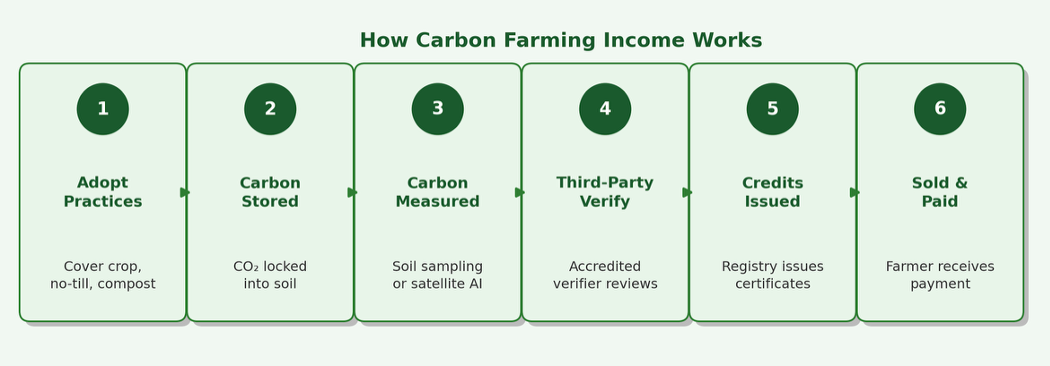
The model works like this. Carbon farming uses practices such as cover cropping, no-till cultivation, and compost application to sequester carbon dioxide in the soil. That stored carbon is measured, independently verified, and converted into credits. Those credits are sold to companies that offset their emissions, and the farmer gets paid.
What you actually earn depends on your soil, your practices, the program you join, and what the market will pay. This article breaks all of that down, without the hype.
What Are Carbon Credits and How Do They Work?
At its core, a carbon credit is straightforward. One credit equals one metric ton of CO₂ removed or reduced from the atmosphere. It is a standardized certificate, issued only after stored carbon has been measured and independently verified by an accredited third party.
The value of a credit depends almost entirely on the quality of that verification. A credit backed by rigorous methodology commands a premium, while one issued under a weak protocol loses buyer confidence fast. Ecosystem Marketplace publishes annual data on voluntary carbon market volumes and pricing, and is the most reliable public reference for tracking how credit values move.
Two markets drive demand. The voluntary carbon market is where most agricultural credits are bought and sold, with corporations purchasing credits to meet self-imposed net-zero targets. The compliance market operates under legally mandated emissions caps, making purchasing obligatory rather than optional. Most buyers are large companies in aviation, energy, retail, and technology, many of which are aligned with the Science Based Targets initiative. Investor ESG pressure reinforces this demand, meaning companies that fall behind on climate action face real financial consequences.
How Farmers Earn Carbon Credits
Everything starts with changing how you farm. Practices like cover cropping, no-till cultivation, compost application, and diverse crop rotations all increase the carbon stored in your soil over time. Precision farming tools can help you track and optimize these changes across your land. The Climate Action Reserve’s Soil Enrichment Protocol is one of the most widely referenced frameworks in the industry. It governs how baseline carbon levels are set and how ongoing progress is tracked.
Once enough storage is documented, an accredited third-party verifier reviews the data. The verified total is then submitted to a registry such as the Verified Carbon Standard, which officially issues the credits. From practice adoption to issuance, this process typically takes 12 to 18 months.
carbon farming works process
Most farmers do not handle this alone. Carbon aggregators manage verification, paperwork, and market access on your behalf, taking a percentage of revenue in return. Active programs like Truterra and the Soil and Water Outcomes Fund are currently enrolling US farmers with no upfront costs. This makes participation accessible to farms of most sizes.
How Much Can You Realistically Earn?
The honest answer is less than most articles suggest. Most farmers earn between $10 and $50 per acre annually from carbon credits. This is based on sequestration rates of 0.1 to 1 ton per acre and market prices of $10 to $50 per credit through 2024 and 2025. The USDA Economic Research Service has published analyses showing these figures vary significantly by soil type, regional climate, and the practices adopted.
Price volatility makes projections even harder. Voluntary carbon credit prices swung dramatically between 2021 and 2024, and while premium rates exist for regenerative agriculture, they are not the norm. Ecosystem Marketplace tracks credit pricing in near real time and is essential reading before committing to any program.
Whether income is recurring or a one-time payment depends entirely on the program structure. Some issue credits annually for as long as your practices continue. Others pay a lump sum at the end of a 5- or 10-year contract term. Either way, this is not a stable monthly income. It is variable, performance-based, and tied to what the market pays when your credits are finally issued.
How AI Is Improving Carbon Credit Verification
Soil carbon is invisible, variable across a single field, and expensive to measure accurately through traditional sampling. Manual soil tests are slow and impossible to scale. For years, this made verification the most expensive and least reliable part of the credit process, costing farmers money in rejected or undervalued claims. Three AI-driven methods are now changing that.
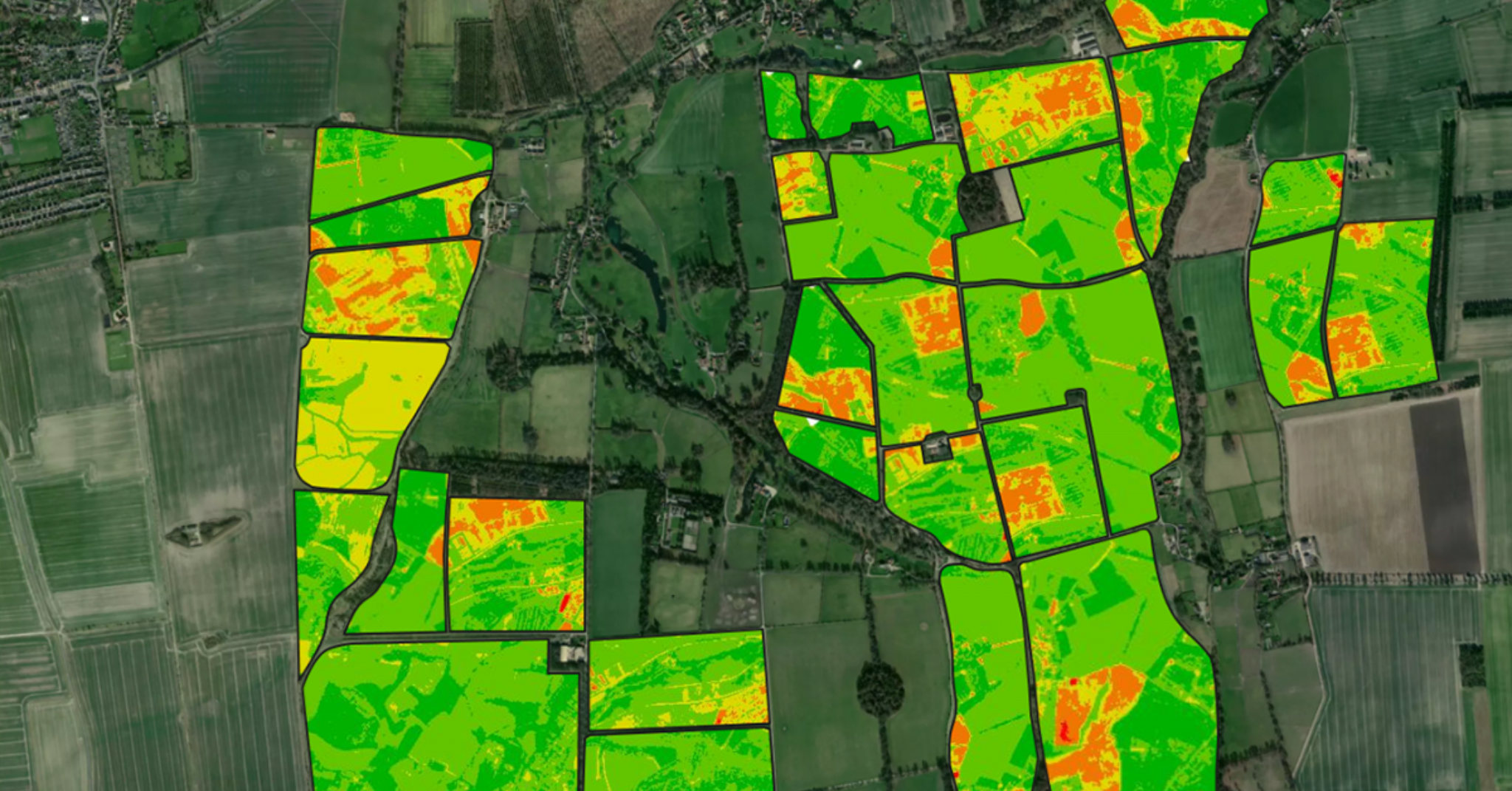
Satellite-based AI analysis of farmland with data overlay for carbon credit verification. Image source: Omdena.
Method 1: Satellite Remote Sensing
Machine learning models analyze satellite imagery, weather data, and historical land-use records to estimate changes in soil carbon across large farming regions. No manual sampling is required. Regrow Ag is one of the leading platforms using this approach, quantifying soil carbon at scale across millions of acres.
Method 2: Hyperspectral Imaging
Hyperspectral sensors capture hundreds of wavelengths of light reflected from the soil surface, enabling precise detection of soil organic matter at the field level. Unlike satellite imagery, this method identifies carbon variation within a single farm. It is increasingly being integrated into AI-powered drone verification workflows.
Method 3: Predictive Modelling
COMET-Farm, developed with USDA support, allows farmers to model their expected carbon sequestration before committing to any program. It uses field-specific data, including soil type, climate, and planned practices, to generate realistic estimates. This gives farmers a reliable baseline before they sign anything.
For farmers, the practical impact is direct. CarbonPlan, which independently audits offset methodologies, has shown that credits backed by stronger data consistently attract higher buyer confidence and better market prices. AI in agriculture is also shortening credit cycles and reducing third-party verification costs. Farmers in AI-verified programs are increasingly positioned to earn more per credit than those relying solely on traditional sampling.
Risks and Challenges in Carbon Credit Markets
Carbon markets are still maturing, and the risks are real. A 2023 investigation by CarbonBrief and The Guardian found that a major certifier had overstated the climate impact of its forest carbon credits. The fallout damaged buyer confidence and exposed serious gaps in market oversight. The key challenges to understand before entering any program include:
Overestimation of carbon storage: Some methodologies credit more carbon than is actually stored, inflating credit value beyond what the science supports.
Lack of standardization: Dozens of competing protocols exist with little consistency between them, making programs difficult to compare.
Price volatility: Credit prices fluctuate significantly year to year, making long-term income projections unreliable.
Permanence risk: Carbon stored in soil can be released again if farming practices change, a risk known as reversal.
Regulatory uncertainty: Government rules around carbon markets are still evolving in most countries, creating policy risk for long-term commitments.
Reform is gaining ground. The Integrity Council for the Voluntary Carbon Market launched its Core Carbon Principles in 2023, setting a new credibility benchmark for the industry. The market is imperfect, but the direction of travel is toward greater transparency. Understanding where it stands today is what separates farmers who benefit from it from those who get burned.
Is Carbon Farming Income Worth It?
With all of that context, is carbon farming income actually worth pursuing? For the right farmer, yes. It works best when you are committed to long-term practice changes, your soil has genuine room to sequester more carbon, and you partner with a program that rigorously verifies. Farms coming from conventional tillage or with historically degraded soils often see the strongest gains.
It does not work well when expectations are misaligned. Inconsistent practices, weak verification programs, or treating carbon income as a primary revenue source are the fastest routes to disappointment. Carbon farming is best approached as a supplemental income stream that rewards good land stewardship. The farmers who get the most out of it are the ones who would have made these practice changes anyway.
At Omdena, we work with teams building AI solutions for agriculture, sustainability, and climate. If you are developing carbon monitoring tools, MRV systems, or climate-smart farming technology, explore how Omdena can help.
FAQ
How much can a farmer earn from carbon credits per acre?
Most farmers earn between $10 and $50 per acre annually, depending on soil type, regional climate, farming practices adopted, and the verification quality of the program they join.
How long does it take to receive carbon credit payments?
From the time you adopt carbon-building practices, it typically takes 12 to 18 months to reach credit issuance. Some programs pay annually after that, while others pay a lump sum at the end of a 5 or 10 year contract.
Do I need a large farm to participate in carbon farming programs?
No. Aggregators like Indigo Ag and Nori pool smaller farms together to meet the minimum verification thresholds. Programs like the Soil and Water Outcomes Fund specifically target mid-size US operations with no upfront costs.
What farming practices generate the most carbon credits?
A combination of no-till or reduced-till farming, cover cropping, compost application, and diverse crop rotations consistently produces the highest sequestration rates. Farms with historically degraded soils or conventional tillage history tend to see the strongest gains.
Is carbon farming income stable and recurring?
No. It is variable and performance-based. Some programs issue credits annually, others pay once after the contract period ends. It is best treated as a supplemental income stream rather than a reliable monthly revenue source.
. What are the biggest risks with carbon credit programs?
The main risks are overestimated carbon storage, price volatility in credit markets, permanence risk if practices change, lack of standardization across programs, and long-term contracts that are difficult to exit. Choosing a program verified under a recognised standard like the Verified Carbon Standard significantly reduces these risks.
Share this article
Share on LinkedIn, send by email, or copy the direct link.